Was America Ever Healthy? Reflections on Valley Forge

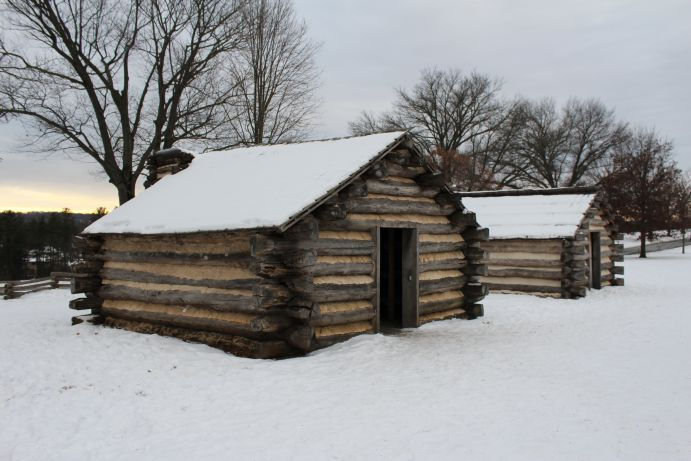
When I saw that Valley Forge was only a twenty-minute drive from Kimberton, I knew I had to stop. Yes, it made my already ten-hour drive a little longer. But 2026 is the 250th anniversary of the United States. And it was winter. And snowy.
As every American kid learns in elementary school, it was snowy that winter of 1777–78, too, when the poorly equipped Continental Army set up a hastily constructed encampment at Valley Forge. So many soldiers lacked proper footwear that legend says the snow turned red from their bleeding feet. And that’s why, even though most people visit Valley Forge in the summer, I wanted to go in the winter.
It was already 4:30 p.m. when I pulled into the huge but empty parking lot at Valley Forge National Historic Park on January 21. The sun sets around 5:00 in southeast Pennsylvania this time of year, so I knew I only had half an hour of light left. I snapped a photo of the visitor center, chatted with a couple rangers who weren’t getting much business on a gloomy weekday afternoon, and headed up the snowy path to see Muhlenberg’s Brigade. There were a few cross-country ski tracks and (non-bloody) footprints in the snow, but no other visitors.

Muhlenberg’s Brigade is a reconstruction of some of the log huts that the soldiers slept in. (They weren’t built to last, so none of the originals have survived 250 years). There were originally somewhere between 1,500 and 2,000 of these huts (the NPS website uses both numbers in the same article). Assuming the reconstructions are accurate, the tiny log cabins were crowded and poorly ventilated, but I guess between the wood stove and large number of bodies packed together, the men were able to stay tolerably warm while they slept.

What the tidy little line of reconstructed huts doesn’t accurately convey is how unhealthy it was to live in the Valley Forge encampment. According to the NPS website, two thousand of the twenty thousand soldiers camped at Valley Forge died that winter. Not in battle—the British never even tried to attack the hilltop forts. They died of diseases like influenza and typhoid, which ran rampant through the camp because of poor sanitation, inadequate clothing (hence the bloody footprints), and malnutrition.

Which makes me wonder—what exactly is Valley Forge a memorial to? Is it a memorial to the bravery of the patriotic soldiers who endured privation for the sake of freedom? Or is it a memorial to the needless deaths of two thousand men whose lives could have been saved if they had adequate food, clothing, housing, and sanitation?

As I trudged through the snow back to my car—thankful that my nice warm hiking boots were keeping my feet snug, dry, and non-bloody—I added Valley Forge to my mental list of reasons why I’m not super thrilled with the phrase “Make America Healthy Again.”
There’s no golden age of health in the past four hundred years of American history to return to. If we’re serious about making the American diet healthy, it won’t be with the scant rations of hardtack and salt meat the Continental Army lived and died on. It will require a revolution in American dietary habits. But hopefully this revolution—unlike the one of 1776—will end up making people healthier instead of killing them.


